
Eportfolio
-
BSc in Nutrition and Food Science(University of Alberta)
-
Minor in Human Ecology

Human Ecology
This page highlights selected academic projects from my studies in Human Ecology, covering program planning, health promotion, community engagement and mental health. Through these projects, I learned to apply research and theory to real-world issues and developed a stronger interest in supporting individual, family, and community well-being through people-centred approaches.
Project excerpts displayed for portfolio purposes. Images are intended to showcase selected aspects of the project and are not the full assignment submission.

A 126-page program plan designed to promote healthy aging among newcomer Canadian seniors in Edmonton

An overview of the program’s key components, including needs assessment, program design, implementation, marketing, budgeting, and evaluation.

A 126-page program plan designed to promote healthy aging among newcomer Canadian seniors in Edmonton


Handy guide to food serving sizes and Nutrition Fact Table


Handy guide to food serving sizes and Nutrition Fact Table

Source: [University of Wisconsin-Madison], [2025].
Source: [University of Wisconsin-Madison], [2025].
One Body, One Life: Health and Wellness Program for Newcomer Seniors in Edmonton
Category: Human Ecology | Health Promotion
Type: Program Planning Group Project
My Role: Collaborated with the team to conduct needs and capacity assessments and develop program/objectives. Primarily contributed to the design of educational and activity sessions, including session content, learning objectives, participant activities, and implementation considerations. Reviewed and provided feedback on the overall program plan to support consistency across project components.
Project Overview:
Developed in partnership with NSTEP (Nutrition Students Teachers Exercising with Parents), this project involved creating a comprehensive health and wellness program for newcomer Canadian seniors in Edmonton. The program was designed to address nutrition, physical activity, social connection, food security, and community integration while promoting healthy aging and overall well-being.
Our team conducted participant and organizational needs and capacity assessments, identified community strengths and challenges, and developed a six-session program combining health education with interactive activities. Program components included healthy eating education, physical activity, grocery budgeting, meal sharing, and healthy cooking. Accessibility, cultural relevance, language needs, participant engagement, and inclusive program design were considered throughout the planning process.
The project resulted in a comprehensive 126-page program plan that included implementation strategies, marketing materials, budget planning, and evaluation tools to support future program delivery. Through this experience, I strengthened my skills in community-based program planning, health promotion, participant-centred program design, and interdisciplinary collaboration.
Community Service Learning, Beverly Day Care
Project excerpts displayed for portfolio purposes. Images are intended to showcase selected aspects of the project and are not the full assignment submission.
Category: Community Engagement
Type: Community Service-Learning Group Project
My Role:
Collaborated with the team to assess the communication needs of Beverly Daycare, conduct organizational and audience research, define a communication challenge, and develop practical social media resources. I contributed throughout the project, including research, needs and audience analysis, solution development, content creation, and the final presentation to the community partner.
Project Overview:
Completed a Community Service-Learning project in partnership with Beverly Day Care Society & Family Resource Centre, a non-profit organization providing child care, community programming, and family resources in Edmonton.
Our team explored how the organization could strengthen its Facebook communication to increase awareness of its services, support child care enrollment, and encourage participation in family resource programs. Through organizational and audience research, we identified parents and caregivers of children aged 0–12 in Edmonton as the primary audience and examined how accessible and consistent communication could better connect local families with available services.
We developed reusable photo and written Facebook post templates that staff could easily customize and publish. The resources included editable layouts, sample content, step-by-step instructions, and visual design elements to make regular social media communication more practical and manageable.
The project concluded with a presentation to the community partner outlining the communication challenge, target audience, design rationale, and proposed solution. Through this experience, I strengthened my skills in organizational needs assessment, audience analysis, strategic communication, visual communication, and collaborative problem-solving.

Demonstrating the use of visual design principles
Demonstrating the use of visual design principles

Academic knowledge + Practical application + Community engagement Source: [University of Lingnan], [2025].
Academic knowledge + Practical application + Community engagement Source: [University of Lingnan], [2025].

Identifying the organization’s communication challenge and examining the target audience to inform the development of an appropriate and audience-centred communication solution.


Identifying the organization’s communication challenge and examining the target audience to inform the development of an appropriate and audience-centred communication solution.


Ecological Systems Theory illustrates how adolescent development and well-being are influenced by interconnected family, community, social, and broader environmental systems.
Ecological Systems Theory illustrates how adolescent development and well-being are influenced by interconnected family, community, social, and broader environmental systems.
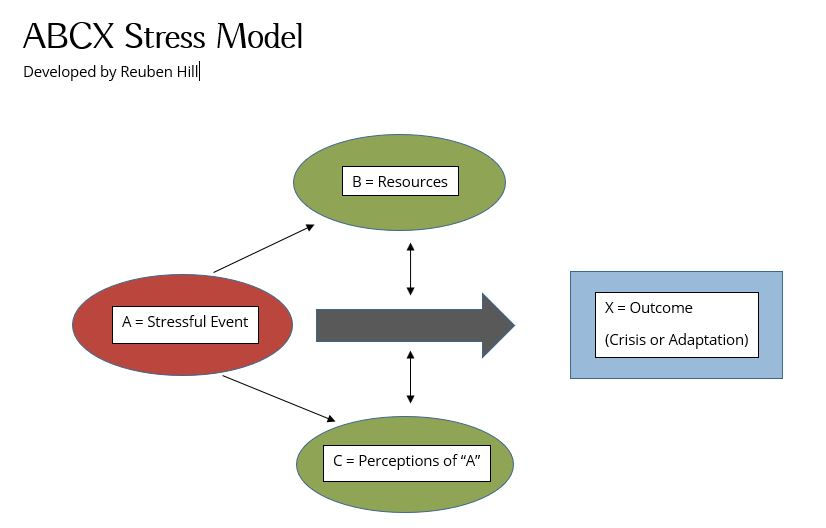
The ABC-X Model illustrates how a family’s response to a stressful event is influenced by available resources and the family’s perception of the situation, contributing to either crisis or adaptation.
The ABC-X Model illustrates how a family’s response to a stressful event is influenced by available resources and the family’s perception of the situation, contributing to either crisis or adaptation.

A detailed case study developed to explore how adolescent depression may be influenced by individual, family, and environmental stressors

the ABC-X Model to examine how adolescent depression may function as a family stressor and how family resources and perceptions influence coping and adaptation.

A detailed case study developed to explore how adolescent depression may be influenced by individual, family, and environmental stressors
Analyzing Adolescent Depression through the Perspective of Stress Theory and Systems Theory
Category: Human Ecology | Family Studies
Type: Academic Analysis Report
My Role:
Conducted literature reviews, synthesized research findings, applied family and ecological theories to a case study, and contributed to the critical analysis, theory comparison, and development of the final report.
Report Overview:
This academic report examined adolescent depression within family and environmental contexts through the application of Family Stress Theory and Systems Theory (Family Stress Theory and Ecological System Theory). Using a detailed case study and evidence from academic literature, we explored how adolescent depression may affect family relationships and functioning, as well as how family dynamics, available resources, and broader environmental factors may influence adolescent mental health.
Family Stress Theory was applied through the ABC-X Model to examine how families respond and adapt to stress based on the interaction between the stressor, available resources, and the family’s perception of the situation. Systems Theory was explored to examine the reciprocal relationships between adolescents, family members, and the broader social environments in which they live.
The report also critically compared the strengths and limitations of these theoretical perspectives and evaluated their application to the case study. Through this experience, I strengthened my skills in literature review, evidence synthesis, theory application, critical and family-centred analysis while developing a deeper understanding of adolescent mental health within family and ecological systems.